A multi-denomination game lets the player select from more than one monetary value per credit. Changing the denomination changes how credit-based stakes and awards translate into money, and may also select a different game configuration.
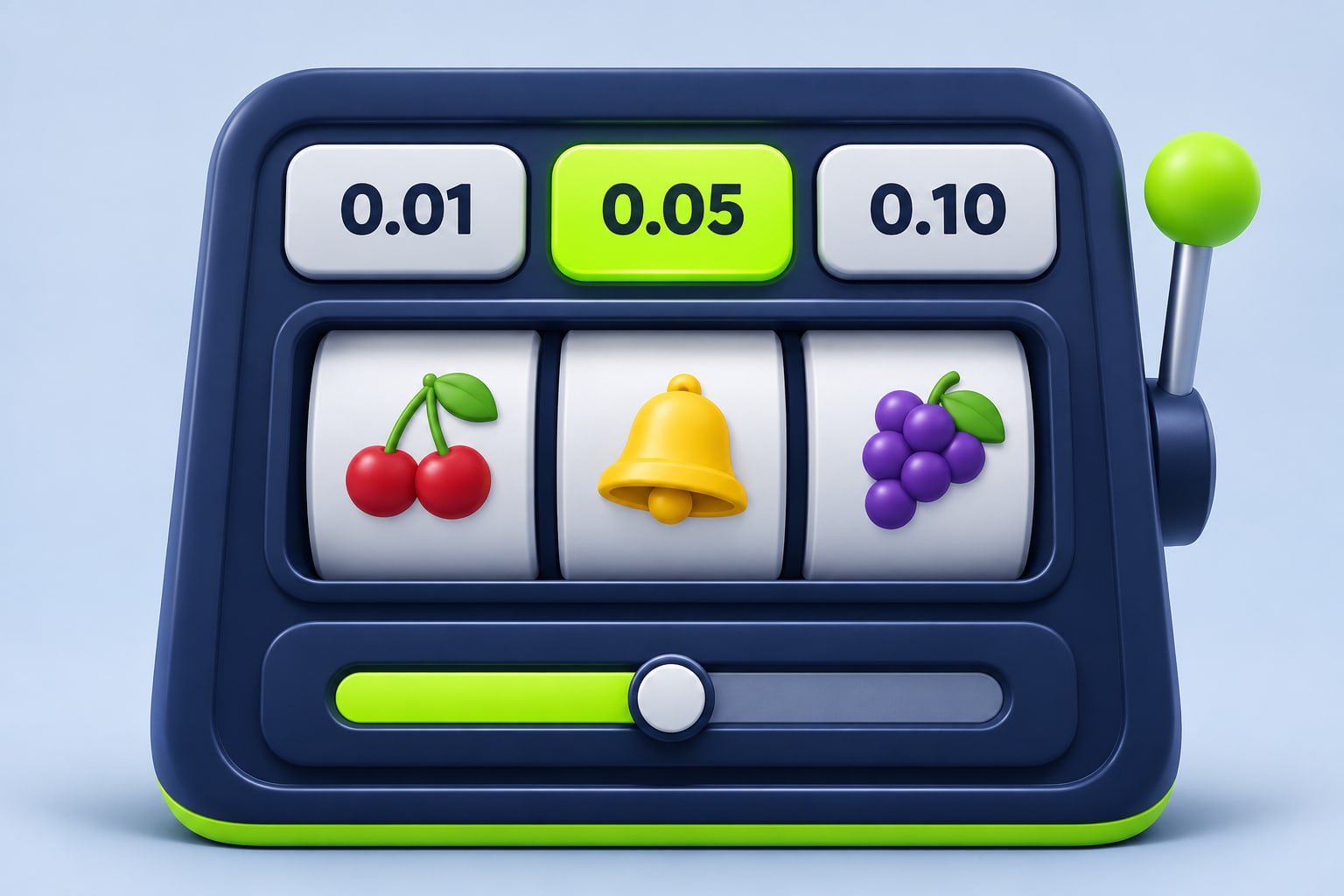
Visual explainer
The same credits can cost different amounts
Illustrative 20-credit wager. Only the monetary value per credit changes in this comparison.
$0.01 per credit$0.20 stake
20 × $0.01 = $0.20.
$0.05 per credit$1.00 stake
20 × $0.05 = $1.00.
$0.10 per credit$2.00 stake
20 × $0.10 = $2.00.
The last setting risks ten times as much as the first, even though the wager still says 20 credits.
Bars compare stake amounts, not chances of winning. A denomination change may also change the paytable or configuration. Related: Credit · Denomination.
What the denomination selector changes
A credit is a unit used by the game to express stakes and awards. The denomination specifies its monetary value. On a multi-denomination machine, a player might be able to choose between credits worth one cent, five cents or ten cents, although the actual options vary. The selector does not necessarily choose the entire cost of a spin or hand. That cost can also depend on the number of credits staked, active lines, hands or optional features. Read the total monetary bet after making a change. A small number beside the denomination control can coexist with a much larger total stake when many credits are being used.
Calculating the real amount wagered
Suppose a game stakes 20 credits per spin. At a denomination of one cent, that is a 20-cent wager. At five cents per credit, the same 20-credit selection costs one currency unit. At ten cents, it costs two units. The visible credit count has not changed, but the money exposed has increased tenfold from the first setting to the last. If a feature adds another stake, include that amount as well. Some interfaces display the total directly in money, while others emphasise credits. Check which convention is active rather than assuming that a familiar button or unchanged credit number means the next play costs the same as the previous one.
Why the displayed balance can look different
An account or machine balance may be shown as money or as credits at the selected denomination. A ten-unit balance corresponds to 1,000 one-cent credits but only 100 ten-cent credits. Changing that display does not itself create or remove money. Confusion can arise when a player remembers the old credit count and interprets the new one as a loss. Use the monetary balance and transaction or game history to understand what actually happened. The same distinction applies to an award quoted as 100 credits: its cash equivalent depends on the denomination applicable to that wager. Always interpret the result using the setting under which the round was played.
Checking whether the paytable also changes
A multi-denomination interface can offer different game configurations at different settings. In video poker, paytables may vary by denomination or credit count; a maximum-credit royal award can also make the relationship non-linear. In slots, the available return configuration or feature terms should be checked in the game information rather than assumed from the denomination alone. Do not claim that a higher denomination always provides a better return. Even where a particular comparison shows a higher theoretical percentage, the larger stake can still increase the expected monetary cost. Compare the complete paytable, total bet and relevant return figure for each setting, and retain uncertainty where the operator does not disclose the necessary information.
Distinguishing denomination from lines and hands
Selecting another denomination is different from activating more paylines, buying additional video-poker hands or increasing credits per line. Those controls can all change the total wager, but they operate on different parts of the calculation. A multi-game machine is different again: it offers different games, whether or not their credit values can be changed. When an interface combines these options, inspect the final confirmation or total-bet field after every adjustment. A change made to explore one setting may preserve other selections from the previous game. The safest description in a review states what the selector actually controls and gives a worked monetary example instead of calling every flexible-stake machine multi-denomination.
Keeping comparisons within an affordable budget
A higher credit value does not make a win due and does not turn a losing session into a better opportunity. Before playing, decide the maximum amount of money you are prepared to lose and translate the selected credits into that same currency. Avoid raising the denomination merely to recover earlier losses faster; it also makes subsequent losses larger. Practice modes can help explain the controls, but their virtual balances are not evidence of future cash results. The purpose of understanding multi-denomination play is to make the actual stake and award value transparent. It should prevent accidental increases in exposure rather than encourage movement toward the largest available setting.