To hit in blackjack is to request another card for the current hand, adding its value to the total under the usual ace-counting rules.
What does hit mean?
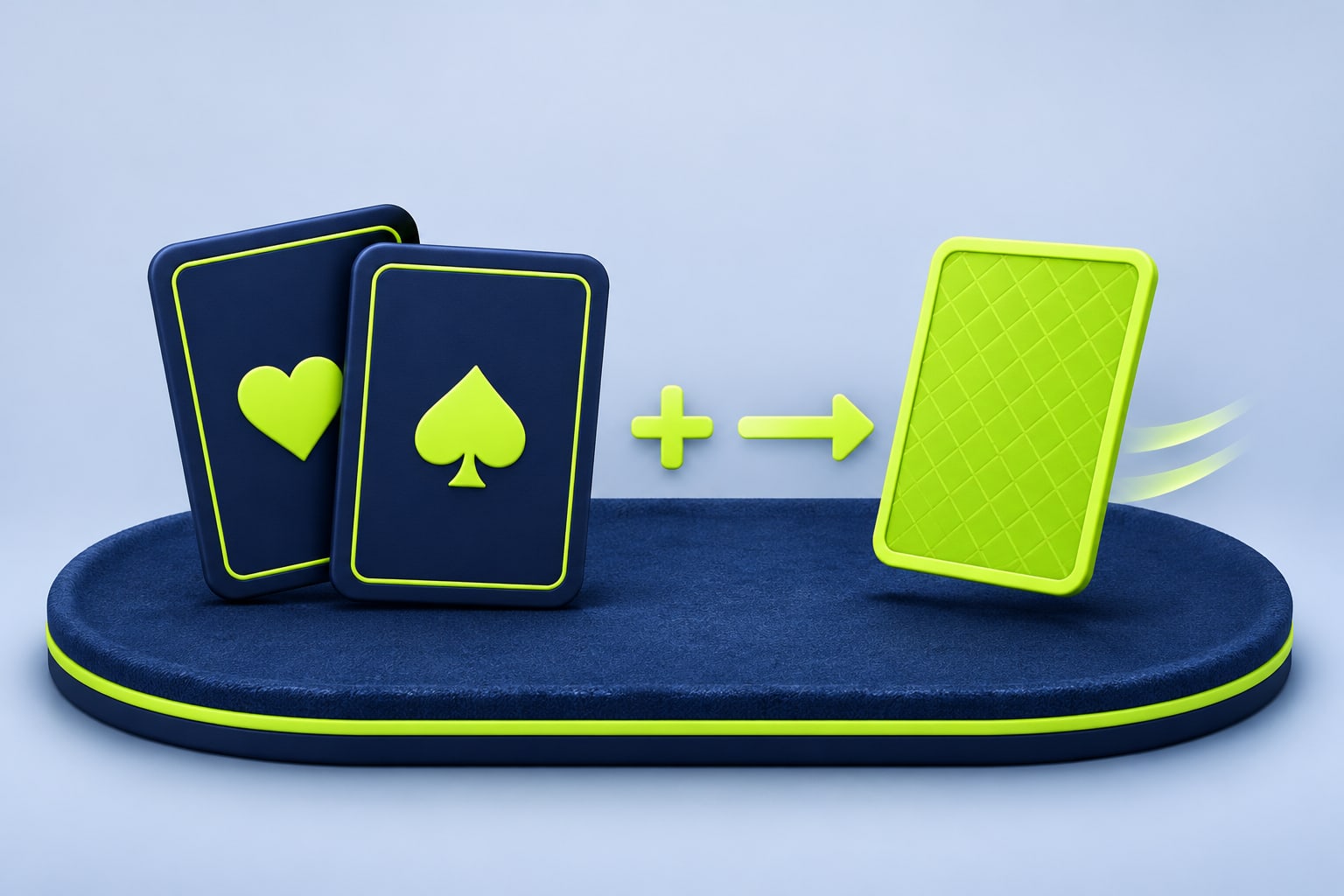
Hit is the blackjack action used to request another card. The new card joins your current hand, and you then reassess its total. In an ordinary hand, hitting does not itself add another wager. You may be able to hit again, stand or take another available action, depending on the game's rules and the cards already received. If the total exceeds 21 after aces have been counted appropriately, the hand busts and the main wager loses. Hitting is different from doubling down, which adds an extra stake and normally commits the hand to exactly one additional card. It is also different from splitting, which turns an eligible pair into separate hands. The interface should identify each action distinctly before you confirm a decision.
How another card changes a hand
Suppose you have a ten and a six, making hard 16. Hitting a four brings the total to 20, while hitting a seven makes 23 and busts. Now consider ace-five, which is soft 16 because the ace can count as 11. If you hit a ten, the ace changes to a value of one and the hand becomes hard 16 rather than 26. If you hit a four instead, you reach soft 20. These examples explain why hard and soft totals need different treatment. A soft hand cannot bust on its very next single-card hit, although the result can become hard and a later hit can then bust. Recalculate after every draw instead of keeping the ace fixed at its earlier value.
Choosing whether to hit
The decision depends on your total, whether it is hard or soft, the dealer's upcard and the complete rules. A basic strategy chart compares the available actions across those conditions. It does not predict the next card. A recommended hit can lose immediately, while an incorrect stand can happen to win. The result of one round therefore does not prove that the decision was sound or unsound. Avoid changing strategy merely because the previous few hits produced high cards. In a game using a shoe, the remaining composition can change as cards are dealt, but a vague impression that low cards are due is not a reliable calculation. Use an appropriate chart and treat uncertain cards as uncertain rather than assigning them a convenient expected rank.
When hitting is restricted
Not every hand can keep requesting cards. After a double, the hand normally receives one card and stops. Split aces often receive only one additional card each, with restrictions that differ from other split hands. A total of 21 may be automatically completed by the software, and a hand that has already stood or busted is finished. Some variants also use special automatic-win conditions, so their rules should be checked separately. At a live online table, the decision timer can expire and trigger a default action; read that policy before playing. If the hit control is absent, review the current hand and rule conditions. Do not assume every missing button is a software fault, and do not increase a wager to test a game you do not understand.
Making the action clear
In online blackjack, select the hit control only after confirming which hand is active, particularly after a split. In a physical casino, use the table's accepted hand signal and ask the dealer about it before play if needed. Card-handling procedures differ between face-up and face-down games, so copying another table can cause confusion. Leave the wager untouched once betting has closed except when a permitted action requires an additional stake. A hit is a decision about the current hand, not a method of recovering earlier losses. Set a spending limit that you can afford and stop when that limit is reached. Understanding the action helps you follow the game, but neither repeated hitting nor a single favourable draw changes the need for those limits.