First base is the blackjack seating position that ordinarily receives cards and acts first, on the dealer's left when facing the players.
What does first base mean?
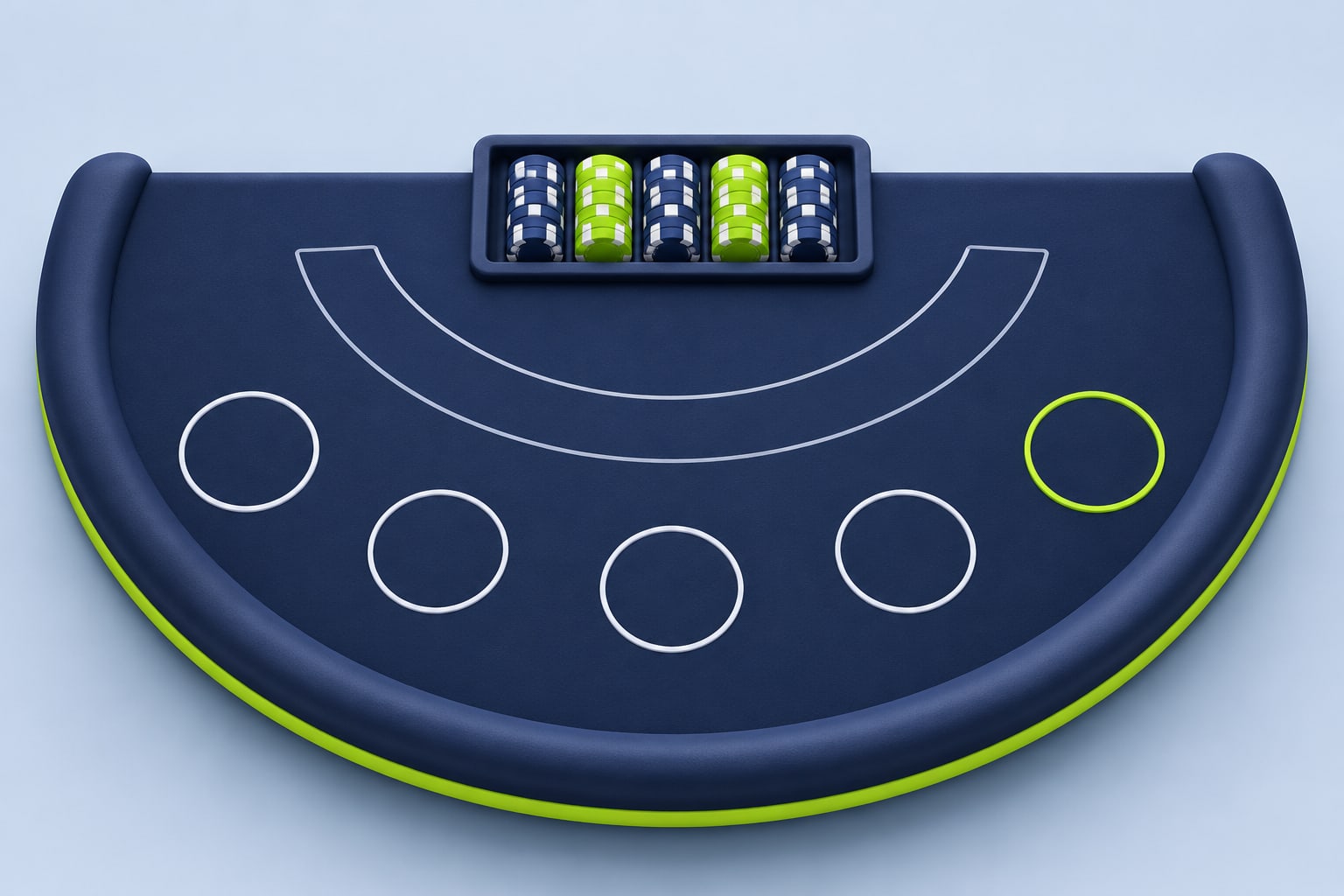
First base is the first player position in the usual dealing order at a blackjack table. It is on the dealer's left when the dealer faces the players; from the seated players' viewpoint, it is at the right-hand end of the table. The term describes position and order, not a stronger class of hand. In a conventional round, the dealer starts distributing cards at that end and then progresses across the occupied spots. Player decisions are also normally taken in order from first base toward third base, the last position. An empty first seat can mean that the earliest occupied position acts first instead. The physical label and the first active player are therefore not always exactly the same thing during a partially occupied round.
What happens from this seat
Imagine three occupied betting spots. After the initial deal and any required dealer-blackjack check, the first player completes the permitted decisions for that hand. This may involve standing immediately, requesting additional cards, doubling, splitting or surrendering when available. The dealer then moves to the next player. When the first player splits, the resulting hands are generally completed as part of that player's turn according to the table procedure. Sitting at first base does not allow you to see later players' drawn cards before making your initial choice. You can still see their exposed initial cards in a face-up game. In a face-down game, the available information differs, so the table format matters more than assumptions based on another game's layout or animation.
Does first base improve the odds?
First base does not create a general winning advantage for a basic strategy player. Moving seats changes which cards are dealt to which hands in a particular sequence, but it does not let you know the unknown sequence in advance. After a round, it is easy to imagine a different seat producing a better outcome. That hindsight is not a repeatable prediction. A card that would have helped one player could hurt another, and the dealer's outcome may also change. The relevant practical factors are the game's rules, payouts, decisions and stakes. Neither the first seat nor the last seat guarantees favourable cards. Claims that one position is inherently lucky should be treated as preferences or stories, rather than as evidence of a lower house advantage.
Position and table etiquette
Act only when the dealer or interface indicates that it is your turn. At a physical table, the correct hand signal depends on whether cards are dealt face up or held by players. Ask the dealer to explain the local procedure before the round if you are unsure. Do not move chips after betting closes unless the permitted action specifically requires an additional wager. First base can feel brisk because there is little waiting time after the initial deal. That does not create an obligation to rush a decision you do not understand. On a timed online table, read the decision timer and default-action rule before joining. Avoid blaming another seat for the cards that follow; each player controls their own permitted decisions, not the hidden order of the shoe.
Choosing a position sensibly
Choose a seat for comfort, visibility and a pace you can follow. A clear view of the dealer's upcard, your stake and the table's rules is more useful than a belief that a particular end of the table pays better. Some live online games use a shared player hand or a virtual seating arrangement, so the familiar first-base label may not have the same practical meaning. Check how that product assigns hands and decisions. If you play conventional blackjack, learn the appropriate basic strategy before increasing stakes or switching seats in response to losses. Set affordable spending and time limits. A change of chair does not reset the probabilities, recover a previous loss or make the next round owe you a better result.