Double-deck blackjack uses two standard decks together, giving 104 cards before any are dealt or removed from play.
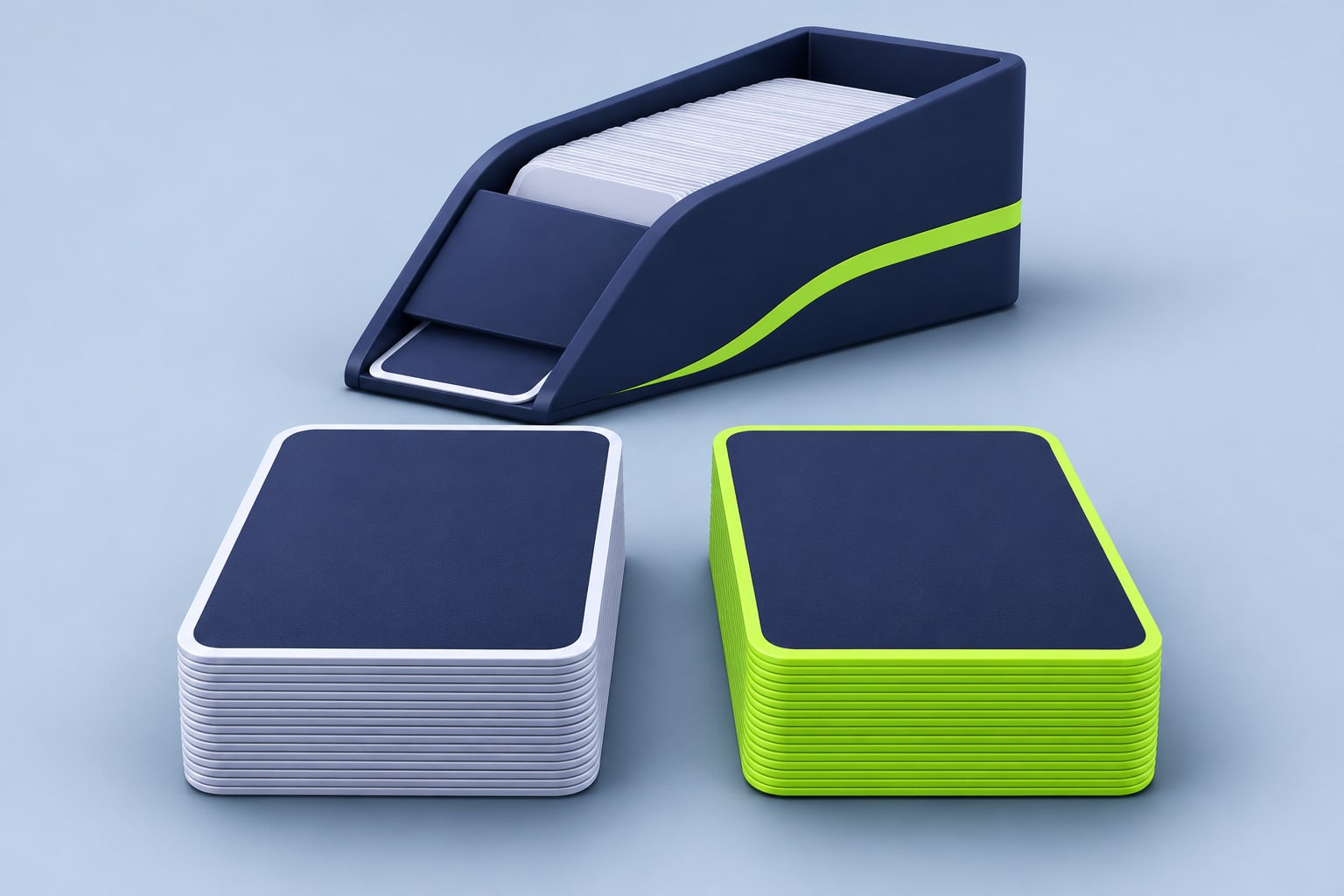
Visual explainer
Two full decks: 104 cards, before any are dealt
Card counts for two ordinary 52-card packs, with no jokers.
Aces
8
Four per deck × two decks.
Ten-value cards
32
10, J, Q and K: 16 per deck × two decks.
Ranks 2 through 9
64
Eight ranks × four suits × two decks.
8 + 32 + 64 = 104 cards.
If the first card removed is an ace, 7 aces remain among 103 cards. The next-card ace probability becomes 7/103, assuming no other removals or reshuffle.
Deck count is only one rule. Blackjack payouts, dealer rules and permitted player actions also affect the game. Related: Blackjack · Card Counting.
What does double-deck mean?
Double-deck blackjack is played with two standard 52-card packs combined into one playing supply. There are 104 cards at the start, including eight aces and 32 ten-value cards when tens, jacks, queens and kings are counted together. The term describes the number of cards in the pack, not the number of hands a player receives or the size of a required wager. A double-deck table can deal cards from the dealer's hands or from a shoe, depending on its procedure. An online game can also specify two decks in its rules. Check whether it uses a persistent shoe or reshuffles between rounds, since an attractive picture of two packs does not establish how cards are actually selected or replaced during play.
Why deck count affects probabilities
Removing a particular card changes the remaining composition by a larger proportion in a smaller pack. If the first card dealt from a fresh double deck is an ace, seven aces remain among 103 cards. The chance that the next card is another ace is therefore seven divided by 103, before considering any other exposed or removed cards. In a fresh six-deck shoe after one ace, 23 aces remain among 311 cards. These fractions are not identical, even though both games use standard decks. This example illustrates card removal, not a betting recommendation. Actual decisions can depend on many remaining cards and the full rules. Do not replace that calculation with a belief that a particular rank is due merely because it has not appeared recently.
Comparing rules rather than deck labels
Fewer decks can be favourable when the other blackjack rules are held constant, but the complete package matters more than the label alone. A double-deck game paying blackjack at 6:5 should not be assumed better than a multi-deck game paying 3:2. For a $10 winning natural, 3:2 pays $15 profit, while 6:5 pays $12 profit; each also returns the original stake. Dealer soft-17 rules, permitted doubles, splitting limits, surrender and the dealer-blackjack procedure all affect the comparison. Side bets add their own separate payouts and risks. Read the table's exact conditions and avoid comparing headline deck counts while ignoring the main-game payout. A lower house advantage still represents an advantage to the casino, not a promise that a player's session will finish ahead.
Shuffling and card information
In a physical game, the dealer normally reshuffles before every card has been used. The portion dealt before the shuffle is often called penetration. A shuffle resets the organised information about the previous pack's remaining composition. An automatic shuffler used between packs is not necessarily the same as a continuous shuffler that returns cards during ongoing play. In an electronic game, the rules may specify a fresh virtual shuffle for each round, which changes whether earlier rounds provide useful remaining-card information. Do not infer the process solely from a shuffle animation or the absence of one. Card counting concerns information about a changing supply; it is not simply remembering that the last few hands lost. Confirm the actual procedure before drawing conclusions from previously displayed cards.
Playing the right version of the game
Use a basic strategy chart designed for the stated deck count and the table's other rules. A chart for single-deck, double-deck or six-deck blackjack can differ on particular decisions, so a generic chart should not be treated as universally exact. Also check whether cards are dealt face down and what handling signals the table requires. Online, inspect the active hand and stake before acting, especially after a split. Deck count does not make extra split and double wagers cost less, and two packs do not imply a lower minimum bet. Set affordable spending and time limits independently of the game description. Double-deck identifies one useful rule, but it cannot guarantee favourable cards, prevent a losing run or turn gambling into a reliable source of income.