The D’Alembert System is a staking progression that increases the next bet by one unit after a loss and reduces it by one unit after a win, normally with a minimum stake of one unit.
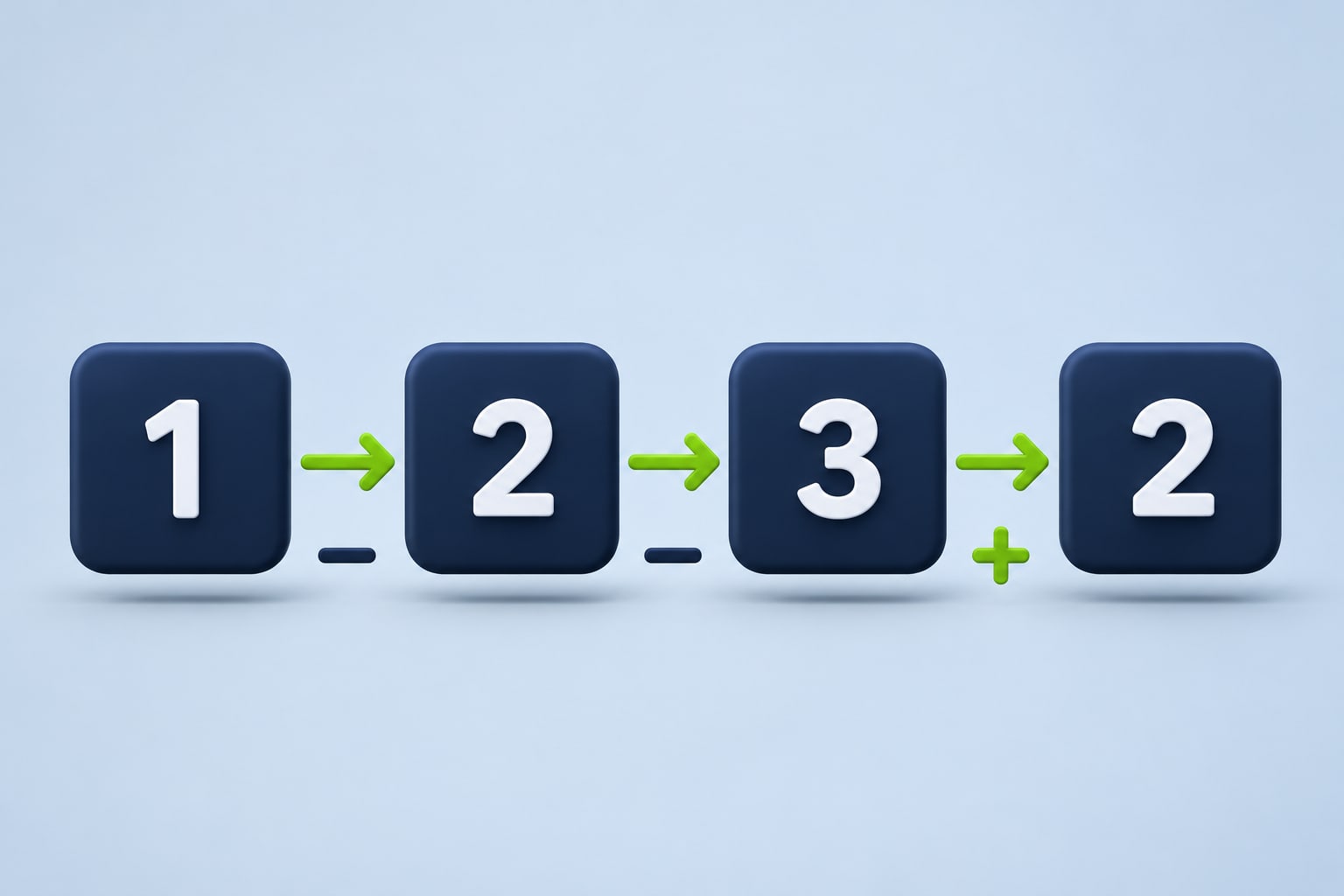
Visual explainer
D’Alembert: add one unit, not double
Illustration with a $5 unit and the result sequence loss → loss → win.
1 · Lose $5
−$5
Cumulative result: −$5. Next stake rises to $10.
2 · Lose $10
−$15
Cumulative result: −$15. Next stake rises to $15.
3 · Win $15
$0
The $15 profit offsets those losses. Next stake falls to $10.
Ten consecutive losing stakes of 1 through 10 units cost 55 units in total. Slower growth still creates increasing exposure.
Even-money profit, returned stakes excluded. This selected sequence is an arithmetic example, not a forecast. Related: Negative Progression · Martingale.
How the progression operates
The D’Alembert System changes the size of a wager according to the previous result. In its familiar form, the player starts at one unit, adds one unit after a loss, and removes one unit after a win. The stake normally stops decreasing at one unit rather than becoming zero or negative. It is commonly discussed for even-money wagers, where a winning bet earns a profit equal to the stake. The system specifies a betting sequence, not how to select a favorable outcome. A player still needs the game rules to know which results win, lose, push, or receive some special settlement.
A worked sequence
Suppose one unit is five dollars and the first three results are loss, loss, win. The stakes are five dollars, ten dollars and fifteen dollars. The first two bets lose fifteen dollars in total; the third earns fifteen dollars in profit and returns its own stake. The net result across those three bets is therefore zero. After that win, the next proposed stake falls to ten dollars. This example illustrates the arithmetic, not a promise about future play. A further loss would put the session behind again, and a different ordering of results can produce a different balance at the same stopping point.
Why it differs from doubling
D’Alembert adds a fixed unit after a loss; the familiar Martingale doubles the preceding stake. Starting from five dollars, four successive D’Alembert stakes are five, ten, fifteen and twenty dollars. A doubling progression would instead use five, ten, twenty and forty dollars. The slower increase changes how quickly money is put at risk, but it does not make exposure small indefinitely. Ten consecutive losing bets at one through ten units cost 55 units in total. With a five-dollar unit, that is 275 dollars lost, and the next requested stake would be 55 dollars if play continued under the same progression.
The probability does not rebalance
A fair roulette wheel does not make red more likely because the last several spins were black. On an ordinary single-zero wheel, a red bet wins on 18 of 37 pockets, loses on 18 black pockets, and also loses on zero under standard settlement. A larger red bet following losses still faces those same probabilities. The expected loss is proportional to the amount wagered under those rules, approximately 2.70 percent of total stakes. A progression can change the distribution of session outcomes, including how often small gains occur, without removing the mathematical disadvantage attached to each new wager.
Limits and rule differences
A progression written on paper can demand a stake that exceeds the money remaining or the table maximum. At that point the original sequence cannot be followed as described. Reducing the unit, borrowing money, or switching tables does not erase the losses already incurred. Also check the wager itself: roulette rules such as la partage change the treatment of zero, while other games may involve pushes, commissions or unequal payouts. These details affect the calculations and cannot be assumed away. A claim that a system always recovers losses often quietly relies on unlimited funds, unlimited permitted stakes, and permission to keep playing indefinitely.
How to interpret system claims
Treat D’Alembert as a description of stake management, not evidence of a winning strategy. When reading a demonstration, count every stake and every losing sequence rather than only the cycles that finish ahead. Check whether returned stakes have been confused with profit and whether the example stops before a large unresolved loss. A spending limit should remain a limit even when the next step in a progression calls for more money. There is no requirement to complete the sequence. Stopping, taking a break or ending a session is preferable to increasing spending simply because a system says recovery might be approaching.