To buy the 4 and 10 in craps is to place buy bets on those numbers, usually receiving true odds of 2 to 1 on a winning number in exchange for a commission. The commission timing and rounding determine the actual cost.
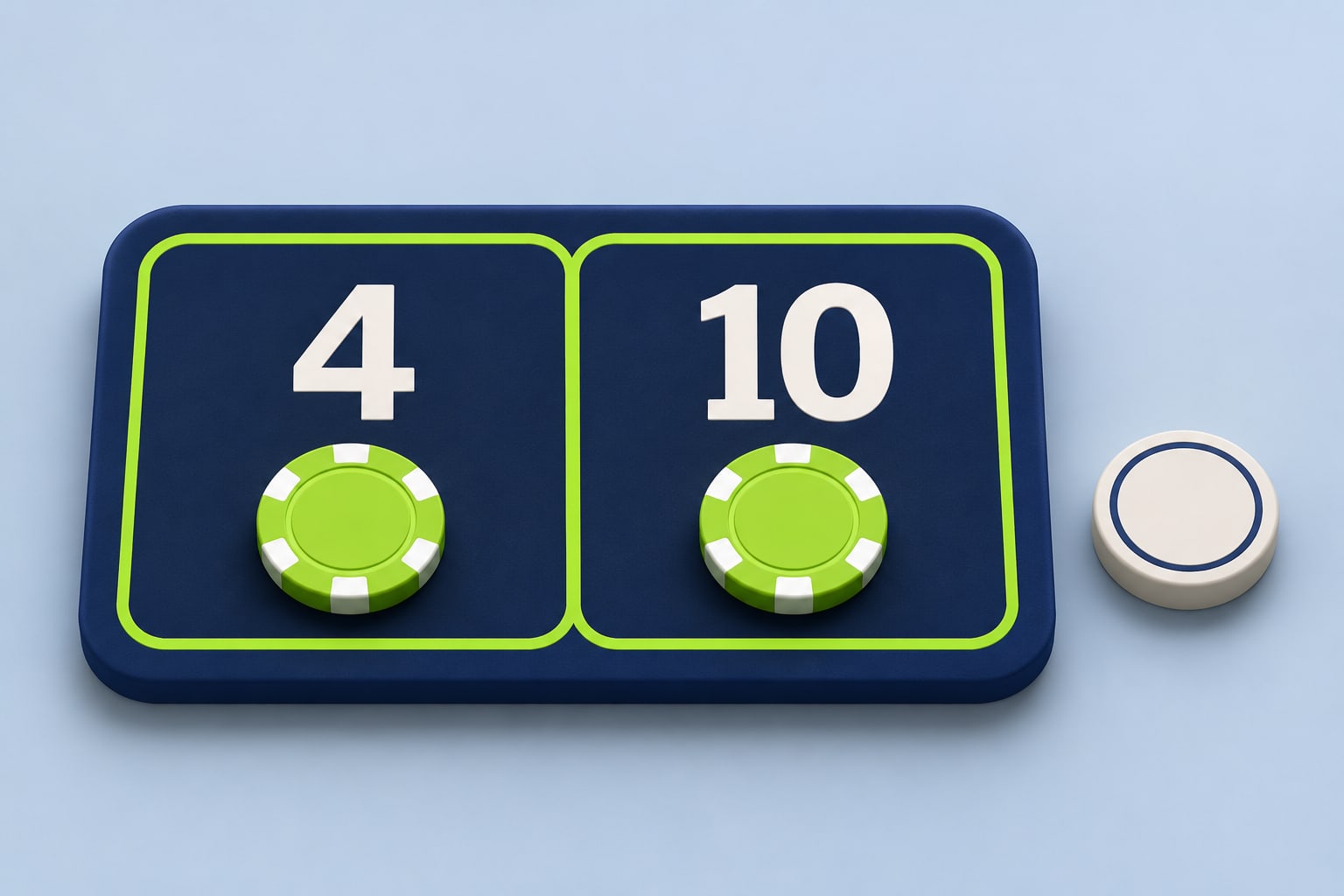
Two numbers and two separate positions
Buying the 4 and 10 means backing each chosen number to appear before a seven while its buy bet is working. These are normally separate positions: a four resolves the buy bet on four, while the ten position has its own status. Buying both does not create a single combined number or require them to appear together. The attraction is the true-odds payout offered in exchange for a commission, commonly called the vig. Before placing the bets, establish the amount on each number, when the commission is collected and whether the bets are working during the next phase of the game.
Why the payout is two to one
There are three ordered ways to roll four with two fair dice and three ways to roll ten. There are six ways to roll seven. For a bet on either individual number, ignoring rolls that leave the bet unresolved, the selected number therefore wins once for every two seven outcomes in the probability model. A fair payout is two units of winnings for each unit risked. A buy bet uses that ratio before commission. The commission is what gives the house its advantage. Calling the payout true odds does not mean the complete transaction is free of cost or that the player has found a guaranteed-profit wager.
A simple winning example
Suppose the buy stake is 20 units on four and the commission is one unit, charged only when that bet wins. A four produces 40 units of winnings before commission, so the net winnings are 39 units, with the original 20-unit stake separately retained or returned according to the table's procedure. A seven before the four loses the stake while the bet is working. If there is also 20 on ten, that other position must be tracked separately. Distinguish the stake, gross winnings and commission when checking a payment; adding the returned stake to winnings can make a payout appear larger than its actual profit.
Commission timing changes the comparison
A commission charged when the wager is made has a different expected cost from the same commission collected only after a win. Rounding can also matter, especially at smaller stakes. A quoted five-percent commission is incomplete information without knowing the base amount, minimum charge and collection rule. Ask whether the charge applies again when a bet is renewed or increased. These details can change the comparison with a place bet on the same number. Do not assume a rule seen at another casino, an online demonstration or a previous visit still applies. Use the actual published terms and table procedure for the wager being considered.
Buy bets, place bets and odds bets
A conventional place bet on four or ten pays 9 to 5, while a buy bet uses 2 to 1 before its commission. A pass-line or come odds bet is a different arrangement that depends on a qualifying underlying bet and its established number. A lay bet reverses the proposition by backing seven before the selected number, with different payout and commission accounting. Similar numbers on the layout do not make these positions interchangeable. When comparing them, include every required stake and charge. Looking only at the largest printed payout omits the conditions that determine what is actually being risked and returned.
Working status and practical limits
Confirm whether each buy bet is on or off during the come-out roll and whether it remains in place after a win. Ask how to reduce or remove it within the house procedure, and check the table's minimum and maximum amounts. Buying both four and ten increases the total money exposed; it does not make the pair of bets independent of the same seven result. A seven can affect both working positions on one roll. Keep that combined exposure visible when planning a limit. Understanding the commission and resolution rules can prevent accounting mistakes, but it does not turn either wager into a reliable way to recover earlier losses.